


The Signals Are Everywhere — A Guide to The Felicity Station
There is something happening around The Felicity Station that started small and has become one of my favourite parts of the entire project.
The Station talks back.
Not every page does it. Not every Signal works the same way. Some are thoughtful, some are funny, some belong to characters, some ask you to make a choice, and some are only meant for the particular visit you are having right now.
That is intentional.
The Signals have become little discoveries scattered around the Station. You might arrive because of a song and find one underneath it. You might open a story and suddenly have a character from that world speaking directly to you. You might come back another day and get something completely different.
So, if you want to go looking, here is where the Signals are currently transmitting.
The front door has two Signals of its own. INCOMING FUTURE SIGNAL lives in the main desktop experience and looks ahead — a small transmission about possibility, direction and whatever might be coming farther down the road.
Farther down the homepage is THE SIGNAL, a three-part message about the present: something to notice, something to think about and something you might choose to do with the day you have in front of you.
The music changes. The Now Playing screen changes. The Signals change. That is the point.
This one belongs at the heart of the Station. Beside The Phone Call is FELICITY’S SIGNAL, introduced with: You answered The Phone Call.
This message was waiting for you. It is a three-line personal message inside the story of Felicity and the reason The Felicity Station exists.
This Signal is quieter than some of the others. It belongs to the person whose name is on the Station.
This page tells the story behind Come On Down, Felicity, Australia and the idea of the Signal itself. Alongside the music is THE PERSONAL SIGNAL.
Three lines arrive for the visitor, and the page asks what those particular lines meant to you. This is also one of the places where the whole idea becomes clear: a Signal is not supposed to predict your future.
It is something to notice, interpret, laugh at, think about or carry away with you.
Walk into the Visitors Wall and the Barista has something to say. THE BARISTA’S SIGNAL comes with an important little warning: This message goes with only this visit.
That sentence is a big part of how the Signals work. Come back another time and the Barista may tell you something else.
And if you want to preserve what you received, there is a place to do exactly that. More about that below.
This one has its own attitude. The Dog House page is a growing jukebox of songs built around the crew, the road, the bar and the stories that come with them.
Between the music sits THE DOG HOUSE BARTENDER SIGNAL. The bartender gives you his own piece of barroom wisdom.
The combinations change, the subject changes, the drinks change and sometimes the answer is probably exactly what you needed. Sometimes he may be completely full of it.
That is also part of the fun. Nobody else at the bar necessarily gets the same message you got.
Singles Corner does something different. Instead of simply receiving one Signal, you are presented with two directions and asked which one you would actually follow.
There is a SINGLE’S SIGNAL and a FRESH FISH SIGNAL, with an OR sitting right between them. Then the page asks the obvious question: Which Signal would you take — and why?
It turns the Signal into a choice instead of just a message.
Fashion has opinions too. Under the Joker Shoppe music sits THE JOKER’S SIGNAL SAYS, offering advice with the personality of the page itself.
It may talk about style, confidence, presentation or how much attention you should really be paying to everybody else’s opinion. And the Joker makes no promises that the next Signal will agree with the last one.
This Signal lives with the Station’s musical treatment of Kahlil Gibran’s The Prophet. THE PROPHET’S SIGNAL delivers a short two-line thought inspired by the language and ideas surrounding the book.
The artwork and Signal are presented together, almost as though the image itself has decided to say something before you continue through the page.
Here the voice changes completely. THE ANGEL’S SIGNAL speaks in the spirit of Arcade from The Revolt of the Angels — questioning authority, examining assumptions and occasionally sounding like an angel who has spent a little too much time in the library.
It is philosophical, sceptical and appropriately rebellious.
The title says GATSBY’S SIGNAL, but the voice belongs to Myrtle Wilson. That gives this one a very different personality.
It is about wanting more, recognising what is real, knowing when somebody is keeping you waiting and remembering that your future ought to belong to you too.
Once you have discovered another dimension, it becomes difficult to pretend it does not exist. A SQUARE’S SIGNAL comes out of the strange geometric world of Flatland.
Perspective, dimensions, assumptions and the danger of believing that the world ends at the edge of what you can currently see all become part of the message.
This one belongs inside an actual treasure hunt. The Submarines of Geelong page explores local naval history, Osborne House, the old J-class submarines and the stories still sitting around Corio Bay.
Inside that journey is THE TREASURE WITHIN SIGNAL. Instead of only looking for wrecks, history and treasure beneath the water, this Signal turns the search inward.
Sometimes the thing worth finding is not sitting on the sea floor.
Pollyanna brings another completely different Signal personality to the Station. The Glad Signal plays with the idea behind the Glad Game — not pretending that bad things are good, but looking again before deciding there is nothing good left to find.
Sometimes the Signal is cheerful. Sometimes it is stubborn. Pollyanna would probably argue there is a difference.
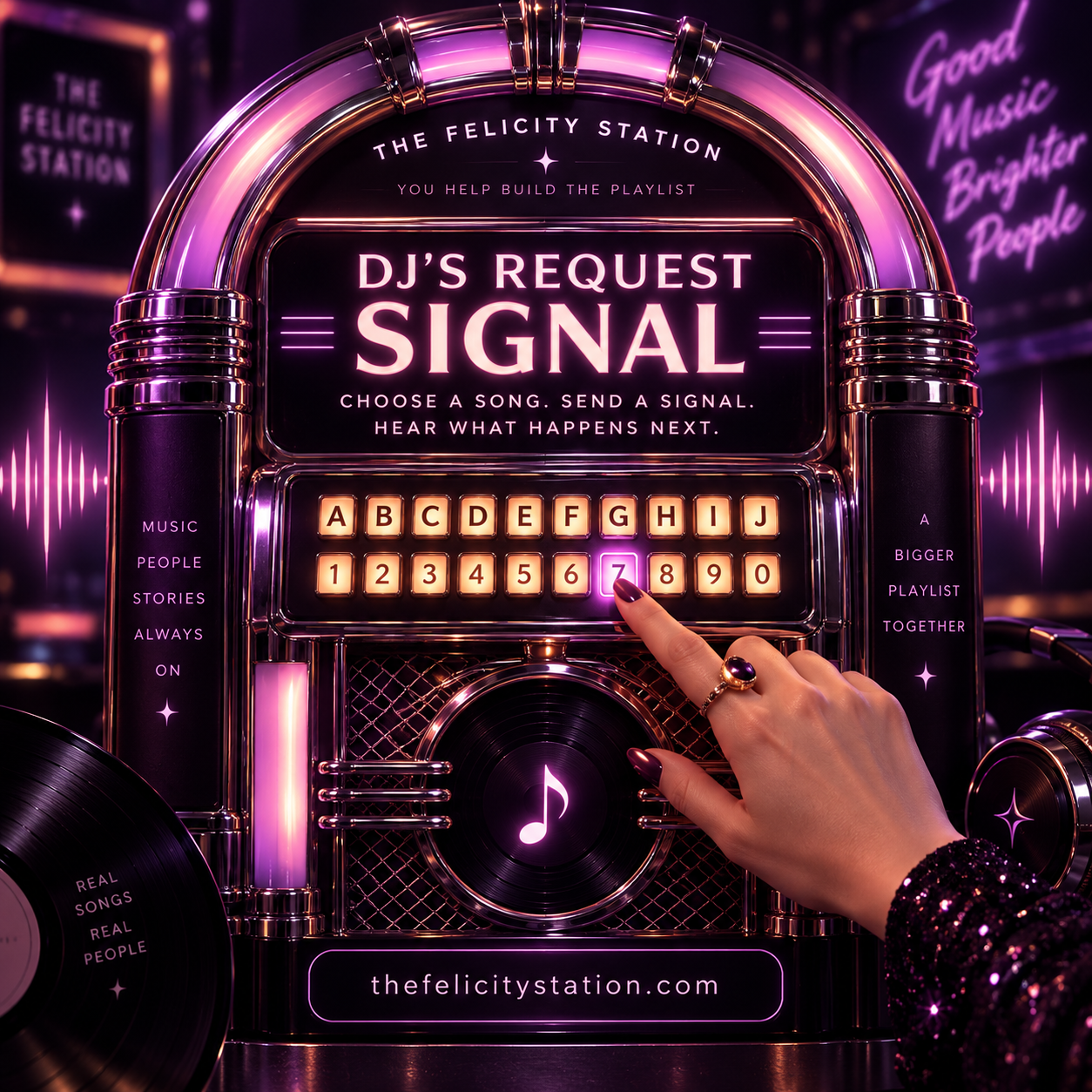
The Library is where listeners can start influencing what happens on the radio. Alongside the song request system is the DJ’S REQUEST SIGNAL.
This one belongs to the act of choosing music itself: the DJ, the request line, whether you should send something around again and what your next move at the Station might be. You can request a song and then see what the booth sends back.
Who Am I? joined the Signal map after the original guide was published. It now has its own Signal Note and belongs in the same trail of page-specific transmissions around The Felicity Station.
This newer AFLW-only Signal Note supports Geelong women and brings Cat Strong In Geelong and Cat Attitude into the Station’s growing Signal map.
And Then There Are the Three Message Boards
The Signals would still be fun if they disappeared when you left. But some of them do something else.
They leave a trail. There are now three persistent message boards around The Felicity Station, and each one has a different job.
On the Visitors Log / Graffiti Wall is THE SIGNAL LOG. Its purpose is simple: The signal keeps travelling after the visit ends.
This is the general Station guestbook. Leave a Signal, a thought, a message or a trace that you passed through.
Somebody else can find it after you are gone.
Also on the Visitors Wall is THE BARISTA’S LOG. The question is: What did the Barista say?
Leave it on the counter. Because the Barista’s message belongs only to that visit, the Log gives you the option of preserving it.
The Signal may be temporary. The note you leave behind does not have to be. Over time, that means the counter can start filling with completely different messages received by different visitors.
Then there is the Dog House version. The Dog House Crew has THE BARTENDER SIGNAL LOG.
Its invitation says it best: What did the bartender say to you?
Leave your signal for the next rider. That turns the Dog House into more than a jukebox.
A rider arrives, hears the songs, gets something from the bartender and can leave the bartender’s words behind for whoever walks through the door next.
Why Build All of This?
Because I do not want The Felicity Station to be a website where you arrive, press Play and leave. I want it to be somewhere you explore.
The songs are part of it. The stories are part of it. The people are part of it. And increasingly, the Signals are part of it too.
Some Signals make you think. Some make you choose. Some make you laugh. Some belong to a book, a character, a bar, a café, a treasure hunt or a woman named Felicity.
And several of them are deliberately built around one idea: This one belongs to this visit. Come back tomorrow and the Station may have something different to say.
That is why I have not put the same Signal on every page. Finding one is supposed to feel like finding something.
And now the Logs mean that some of those temporary encounters can become part of the permanent history of the Station. So wander around.
Play something you have never heard. Open a page you normally would have skipped. See who talks back. And if one of the Signals gives you something worth keeping, leave it behind for the next person.
The Felicity Station is where the signal, the land, the journey, and the people meet. Sometimes the Station transmits.
Sometimes you transmit back.


Comments